Huskii’s Inherent Vice and the Cost of Unfiltered Honesty
Huskii’s Inherent Vice May Be His Defining Work and That Comes With a Cost
Huskii has spent the better part of a decade turning lived trauma into some of Australian hip hop’s most confronting and uncompromising work. As he prepares to release Inherent Vice this Valentine’s Day, there is a growing sense that the album could represent the apex of his creative output, not despite his turbulence, but because of it. The lingering question is whether that artistic elevation must always come at such personal expense.
Since emerging from Wollongong’s DIY underground in 2016, Huskii has built a catalogue defined by its refusal to soften experience. From early SoundCloud uploads to the ARIA chart success of Antihero, his music has operated as both confession and confrontation. Where many artists shape struggle into something more digestible, Huskii presents it without polish. His writing cuts sharply, often uncomfortably, yet it carries an empathy that can only come from someone who has lived what he describes.
That tension between brutality and understanding has made him one of Australia’s most compelling voices in rap, even as his public life has grown increasingly unstable.
A Career Built Without Softening the Truth
Inherent Vice arrives at a moment when Huskii’s artistic trajectory and personal circumstances appear more entangled than ever. Following the introspective weight of Antihero and the heavier reflections of Golgotha, this release feels less like a commercial pivot and more like a creative culmination.
Early indicators suggest a project that synthesises the urgency of his earliest material with the technical refinement he has developed over time. If Antihero proved Huskii could command mainstream attention without compromising his vision, Inherent Vice may demonstrate whether he can sustain that vision at its highest level.
To understand why this album matters, it is necessary to trace how Huskii’s music has evolved alongside, and sometimes in spite of, his circumstances. His 2016 debut Barely Awake and Paranoid established the foundation. Unfiltered accounts of addiction, incarceration, and mental collapse were delivered with an intensity that felt closer to exorcism than performance. The rawness was not aesthetic, it was necessity.
By 2019, 4 Days with Chillinit showed a sharpened writer without a diluted edge. The collaborative EP expanded his reach while reinforcing his commitment to authenticity over accessibility. It demonstrated that Huskii could share space without surrendering control of his voice.
Antihero, Vindication, and the Weight of Survival
Vindication arrived in 2022 with Antihero. Seven tracks, nineteen minutes, and a debut at number one on the ARIA Albums Chart. Its commercial success mattered less for its scale than for what it represented. Australian audiences were willing to meet an artist on his own terms.
Huskii did not chase radio play or algorithmic approval. He delivered a concise, brutal, and deeply personal statement. The album’s brevity was not a limitation but a declaration, reflecting an artist uninterested in filler or concession.
Golgotha, released in 2025, deepened that approach. Its title, referencing the site of crucifixion, signalled an artist prepared to lean into his own mythology of suffering. The project explored mortality, faith, and consequence with greater reflection than his earlier work. The music remained visceral, but there was a clear sense that Huskii was no longer just documenting pain. He was interrogating it.
Inherent Vice and the Question of Identity
Inherent Vice appears poised to push that evolution further. The album title signals a project more concerned with contradiction than resolution.
Huskii has always articulated chaos with clarity, particularly around addiction, loss, and self destruction. This release suggests an artist confronting the possibility that some struggles may be inseparable from identity itself. If the album fulfils its promise, it will not offer redemption or closure. It will present a fuller portrait of an artist who has learned to create meaning from wreckage without pretending the wreckage has disappeared.
What makes Huskii’s work so resonant is its refusal to perform recovery for public consumption. He has spoken openly about his discomfort with fame, framing his music as expression rather than commodity. That stance is reflected throughout his catalogue. There is no pandering and no attempt to sanitise experience for broader appeal. The connection his work creates with listeners is not manufactured. It is earned.
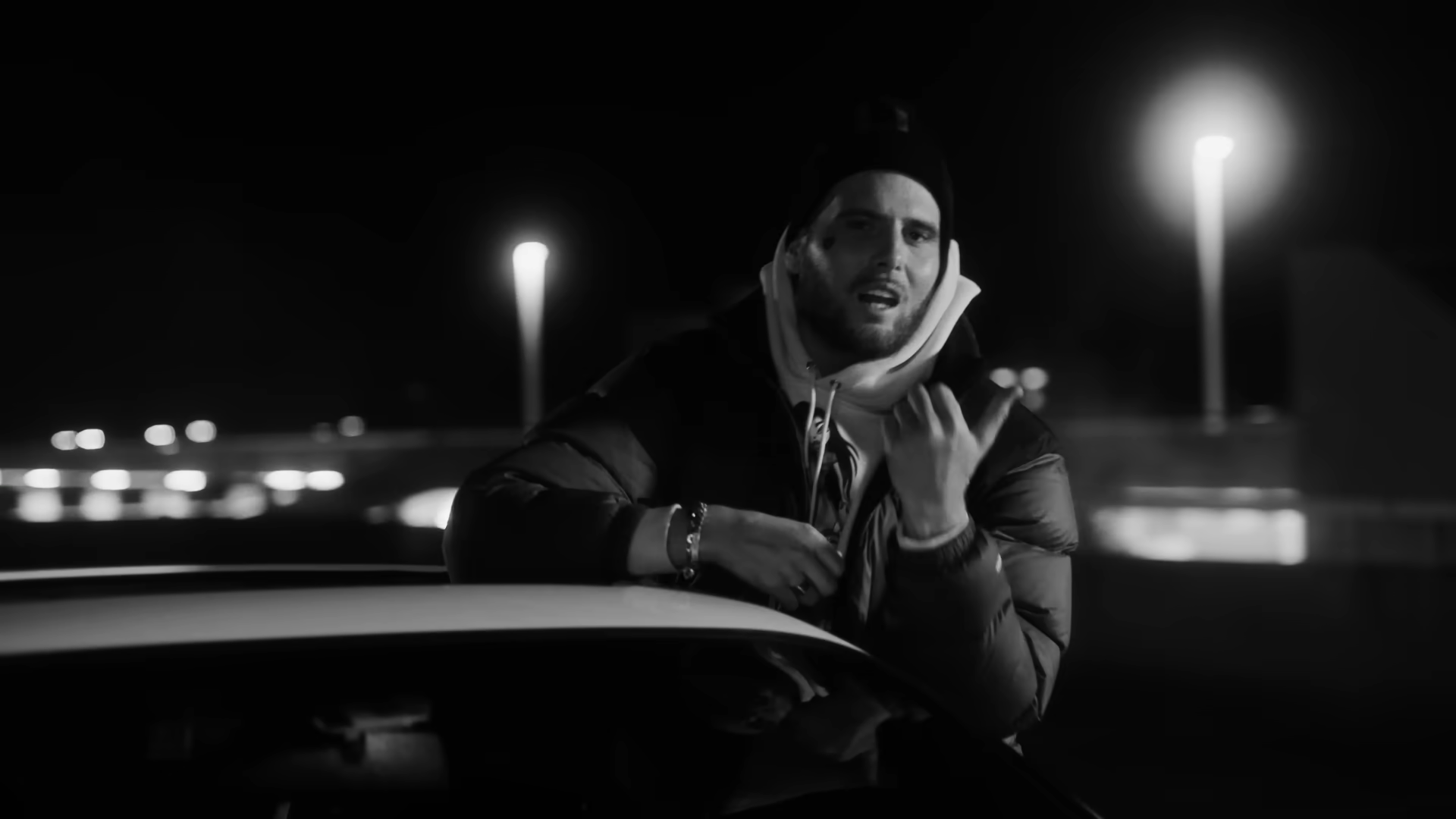
The Cost of Art That Never Looks Away
That same authenticity raises an uncomfortable question. Must the art always come from the same well of suffering?
Huskii’s creative output has consistently sharpened while his personal life has remained unstable. Legal issues, public controversies, and reports of erratic behaviour have followed his career even as his music has reached new heights. They reflect patterns that mirror the cycles he has been documenting for years. The tension between creative brilliance and ongoing collapse is impossible to ignore.
Music discourse often romanticises the troubled artist, framing suffering as a prerequisite for greatness. Huskii’s career complicates that narrative. His pain is real and his music reflects it with a clarity few Australian artists can match. But there is no virtue in watching someone deteriorate, even if the work produced in the process is exceptional.
Legacy, Endurance, and What Comes Next
Within Australian hip hop, Huskii occupies a singular position. He is not an outsider or a novelty. He is a veteran whose work has helped redefine what local rap can be. Grounded in Australian experience, unafraid of darkness, and indifferent to global trends, his influence is visible in a new generation of artists willing to centre vulnerability and emotional honesty.
Legacy, however, is only part of the conversation. Huskii has endured public backlash, legal battles, and personal collapse, yet he continues to release music. That persistence suggests something deeper than ambition or ego. Creation appears essential, a way of imposing order on chaos, even if that chaos never fully resolves.
The tragedy would be if Huskii’s strongest work also marked his breaking point. The hope is that Inherent Vice represents not an endpoint, but a recalibration. A project that demonstrates his artistic peak without demanding further self destruction.
Inherent Vice may ultimately stand as Huskii’s magnum opus. Whether it also marks a turning point, or simply another chapter in an unresolved cycle, remains to be seen. What is certain is that the artist behind it deserves recognition not only for the work he creates, but for the endurance required to keep creating at all.