“Doc Ock” Marks DonDrino’s Most Controlled Statement Yet
DonDrino Films “Doc Ock” Music Video on the Sunshine Coast
DonDrino's return with "Doc Ock" marks a calculated re-entry into the scene after incarceration and a prolonged absence. His first major move since his debut EP dropped in August 2025, and over a year removed from his April 2024 music video, the track isn't just a summer trap anthem. It's a statement of precision and control from an artist rebuilding momentum while deliberately anchoring himself to the community that held him down.
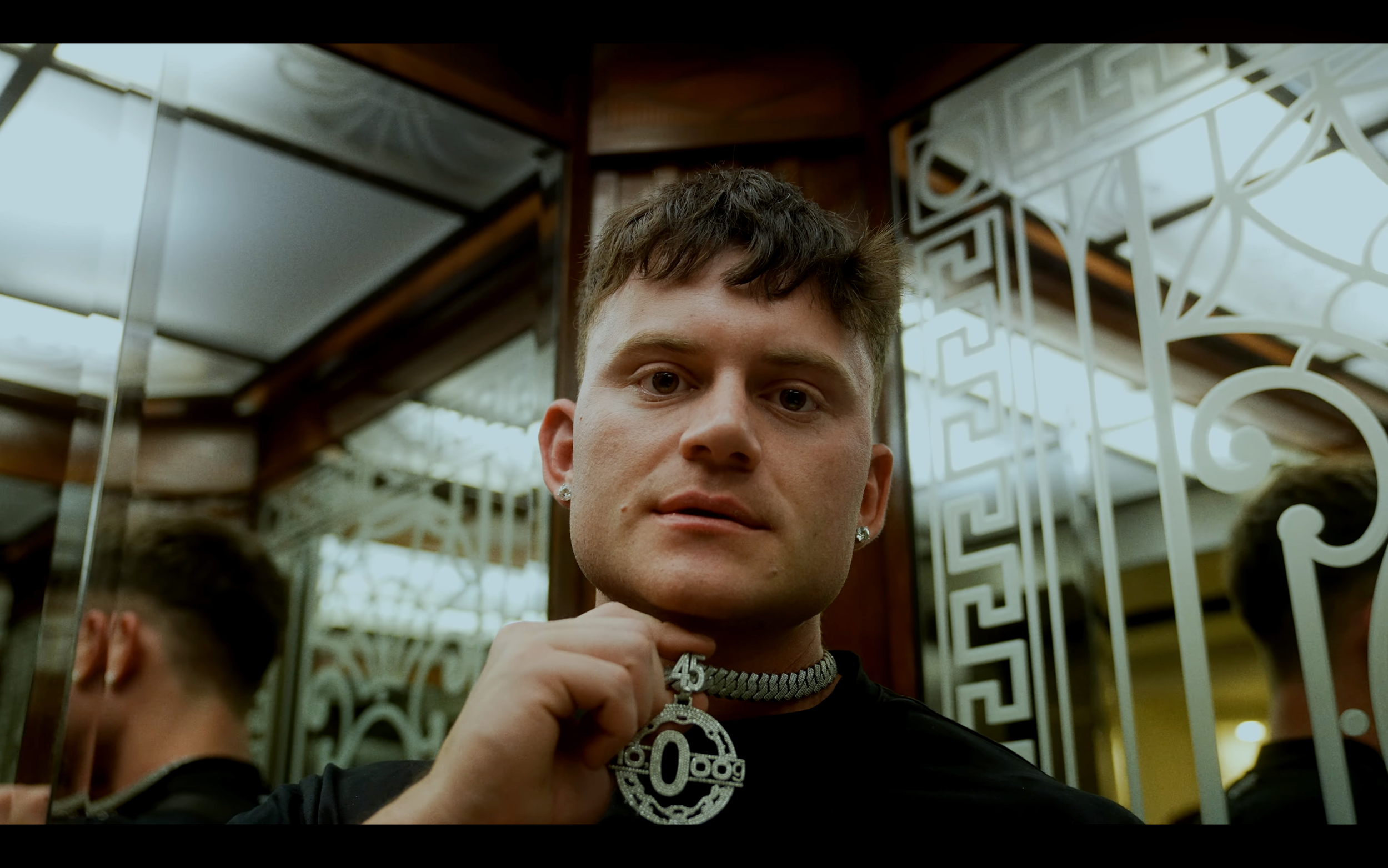
The music video, directed by Ryan J Ridley of Blood Juice, was filmed on the Sunshine Coast, and DonDrino made it participatory. He put out a story inviting fans to be part of the shoot, turning the video into a communal event rather than a closed set production. It's a smart move that goes beyond typical artist fan engagement. By opening the process, DonDrino cements himself into the Sunshine Coast's cultural fabric, transforming a music video into a collective moment. It's not just his comeback, it's their comeback. The visual becomes a document of loyalty, presence, and rootedness, reinforcing that even after time away, he's still embedded in the place that shaped him.
This grounding matters in the context of the track itself, which is all about control, structure, and navigating chaos. The video roots that chaos in a specific geography, making the abstract concrete and the personal communal.
Marvel Metaphors and Mechanical Precision
The title initially seems like surface level Marvel villain worship. Doc Ock, the brilliant but chaotic antagonist with four mechanical tentacles. But DonDrino isn't comparing himself to the villainy, he's mirroring the mechanism. Doctor Octopus operates through four synchronized, independent limbs, each one capable of separate function but working toward a unified goal. The character is methodical, calculated, and dangerously intelligent, using his appendages to manipulate his environment with surgical precision. Unlike other Spider-Man villains who rely on brute force or chaos, Doc Ock is an engineer. He builds systems, exploits weaknesses, and operates with cold efficiency even when everything around him is collapsing.
DonDrino adopts this same architecture. His verses are built in four bar units that operate like those mechanical arms, each segment independent yet synchronized, creating a controlled chaos that feels unstable on the surface but is structurally airtight underneath. Just as Doc Ock's tentacles repeat the same core function (grab, strike, manipulate, control), DonDrino's bars follow a rigid internal pattern.
Bar 1 is the setup. Identity, position, exposure. Streets, confinement, paranoia, the unstable present.
Bars 2 and 3 are the action. Crime, women, movement, chaos. The narrative unfolds.
Bar 4 is the resolution. Money, power, consequence, control. The hidden punchline. The final payoff.
This isn't accidental. It's structured for precision rather than casual consumption, each four bar block compressing an entire arc. Struggle becomes movement becomes dominance. The fourth bar becomes the recurring anchor, functioning like a hook without ever being one. Repeated motifs land consistently on these end bars: "ock and a half," raids, visibility, control. They create subconscious resolution even as the flow drifts off beat. The listener doesn't need to consciously track the structure to feel its grip.
How Time Away Sharpened DonDrino’s Craft
The bravest move? DonDrino raps off beat throughout the verses. The internal bars drift against the instrumental, creating instability and tension. It's disorienting, like watching someone walk a tightrope in a windstorm. But every four bar unit still resolves. The structure locks in even when the rhythm doesn't. The listener feels closure without knowing why. It's the musical equivalent of Doc Ock's tentacles flailing wildly before snapping into precise, devastating formation.
There's an ironic flex in his reference to not missing a beat like CADA, the Australian rap and RnB radio station that played in prison. It's layered: he's literally rapping off beat while claiming he never misses one, and he's nodding to the soundtrack of his incarceration, the constant audio presence that kept him connected to the culture while locked away. CADA becomes both a timestamp of where he's been and proof that he stayed locked in even when physically removed from the scene.
Meanwhile, the hook snaps back on beat, acting as a safe zone. It's a moment of control against the verses' controlled chaos, a breather, a reminder that DonDrino is in command of the instability he's creating. The contrast is intentional. The verses document risk, the hook reasserts dominance.
This rhythmic risk mirrors the thematic one. DonDrino documents legally dangerous details on those end bars, amounts and actions and consequences, turning flexes into implied liabilities. He's not hiding. He's structuring his exposure like a controlled demolition. The most incriminating lines land where they carry the most weight, buried in plain sight within the song's architecture.
The track is obsessed with counts and measurements. "Ock and a half," "3.5," "second time," "third time." It's mechanical, segmented, hyper aware, like someone calculating risk in real time or weighing product on a scale. This numerical fixation reinforces the Doc Ock parallel. Everything is measured, portioned, controlled. Even chaos has a system.
The song's macro structure mirrors the four bar logic. The entire track moves from origin to dominance, functioning like one extended unit. The first verse establishes the struggle and exposure, the final bars assert control and consequence. It's a compression of an entire career arc into three minutes. Fall, grind, rise.
Four Bars at a Time: DonDrino’s Calculated Takeover
"Doc Ock" isn't just a single, it's a relaunch. DonDrino is rebuilding off the momentum of earlier hits like "VIOLATE" featuring Rops1, "82" featuring Flowz Dilione, and the solo cut "sexadixxx." Those tracks established his voice. "Doc Ock" refines it, showing growth in both craft and concept. The time away, forced and chosen, could have killed the momentum. Instead, DonDrino uses it as fuel, returning with sharper structure and clearer intent.
The Sunshine Coast video shoot reinforces this. After incarceration and absence, he doesn't retreat or rebrand. He doubles down on place, community, and presence. The fans in the video aren't extras, they're co-signers. The visual says: I'm still here, we're still here, and this is still ours.
"Doc Ock" is complex not through wordplay but through architecture. Rhythmic, conceptual, deeply intentional. Most listeners will feel the tension and release, the instability and control, without consciously understanding the four bar scaffolding or the off beat drift. That's the point. Like Doc Ock's tentacles, the structure is mechanical and invisible until you stop to examine how it works.
DonDrino has learned to weaponize structure. He's not just rapping, he's engineering. And in a scene where so many artists rely on obvious hooks and safe rhythms, "Doc Ock" stands out precisely because it refuses to make things easy. It demands attention without begging for it, and rewards close listening without requiring it.
This is an artist who's turned absence into advantage, chaos into system, and a comeback into a calculated takeover. Four bars at a time.