Brisbane Is Not Following the Map. It’s Drawing Its Own
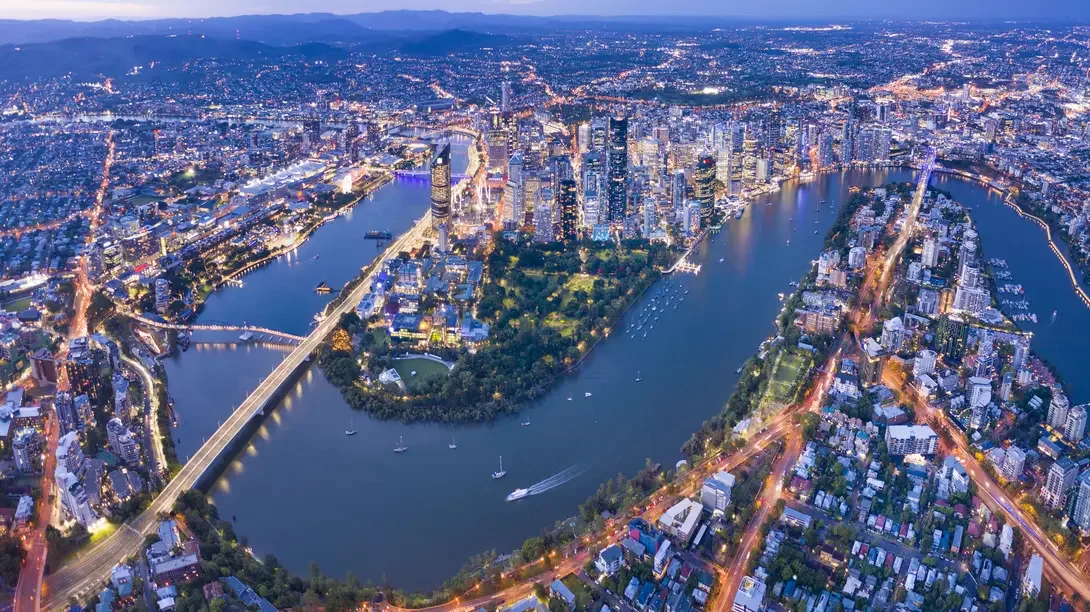
Brisbane’s hip hop scene has always produced talent. What is emerging now is something more deliberate: a scene building on its own terms.
For years there has been a quiet assumption around Brisbane hip hop. The idea that the city produces artists who eventually move south, or who only break nationally once Sydney or Melbourne decides to pay attention.
It is an assumption built on a partial reading of history, and one that the current moment is quietly dismantling.
Brisbane is not simply producing more artists. The Brisbane hip hop scene is producing artists with a clearer sense of who they are and where they come from. That distinction matters more than any chart position or industry co-sign.
The Artists Who Built the Foundation of Brisbane Hip Hop
To understand what is happening in Brisbane right now, it helps to understand what came before it. The city did not arrive at this moment without precedent.
Artists like Nerve, Lisi and Day1 established that Brisbane could produce nationally recognised hip hop talent. Each carved out distinct lanes that demonstrated the city’s range long before the current wave arrived.
Nerve built an independent infrastructure that proved a Brisbane artist could sustain a national career without relying on the Sydney industry ecosystem. Self-producing a large portion of his catalogue across projects like Life & Times of Nerve, Killa, and Heart On My Sleeve, he did not wait for permission from gatekeepers. He built around them, establishing a dedicated national audience through relentless touring and output.
Lisi, coming out of Goodna in Brisbane’s west, pushed the city into the national conversation during the Australian drill era. His blend of drill production with melodic delivery on tracks like Say Less, Dangerous and Blood In My Eyes gained widespread streaming traction and demonstrated that Brisbane’s western suburbs had something distinct to say.
Day1 emerged through SoundCloud and the early streaming era, becoming one of the first Brisbane artists to reach national playlists without traditional industry infrastructure behind him.
These were not small achievements. But they were also, in important ways, isolated. Singular artists making noise without a simultaneous wave behind them.
The New Wave of Brisbane Rap Artists
The difference between then and now is not talent. Brisbane has never been short of that.
The difference is concentration.
For the first time, the Brisbane rap scene has a critical mass of artists releasing consistently, building audiences at the same time, and collaborating across what is starting to look like a genuine local network. That density is what turns individual artists into a scene.
Oz Polo represents one of the clearest examples of the new model. His focus is not only on records but on performance culture. Stage presence, community, and the live experience sit at the centre of how he builds momentum.
KZ Da Bandit, operating out of Logan in Brisbane’s south, occupies a harder lane. His street-oriented trap records carry real underground traction, including collaborations with Melbourne rapper CV that show Brisbane’s network expanding outward without losing its point of origin.
Casto1 brings another dimension. His work, including 1000 Hours produced by SMAK, leans toward introspection, prioritising personal storytelling rather than party rap or drill posturing.
JJ4K represents the output-first generation. His catalogue of releases including I’m Back (Freestyle), Blatant, Jump, Lead You On, and Vito shows an artist treating momentum as a discipline.
These artists are not chasing the same sound. What they share is the same city, the same moment, and a growing sense that both are worth building around.
Why the Brisbane Hip Hop Scene Has Room to Grow
Part of this shift is structural.
Streaming platforms and short-form video have changed how artists build audiences. The old model required proximity to industry power: labels, radio relationships, and the informal networks concentrated in Sydney and Melbourne.
The current model rewards consistency, visual quality and platform fluency. Brisbane artists are operating naturally inside that system.
The city’s cost structure also plays a role. Cheaper studios, lower living costs and a creative community close enough to collaborate without geographic friction make sustained output easier.
An artist who can release consistently while maintaining their life builds differently from one forced to choose between the two. Over time that advantage compounds.
The Risk of Declaring a Scene Too Early
There is still reason for caution.
Music scenes have been declared prematurely before, and the gap between online traction and long-term cultural impact is real.
Brisbane’s current wave is building momentum, but it has not yet produced the kind of singular flashpoint moment that forces national attention. Western Sydney had that moment when OneFour emerged and reshaped how the country viewed drill.
But that comparison may not be the right measure.
Brisbane’s growth appears slower, more distributed and arguably more durable. Multiple artists are moving in related directions. None of them require the others to succeed, but all benefit from sharing the same cultural window.
That is a different kind of scene formation.
A Brisbane Identity Still Taking Shape
Sydney hip hop carries the weight of place. Western Sydney, public housing estates and the layered textures of a multicultural city.
Melbourne has its own markers as well, often tied to UK sounds and underground club culture.
Brisbane does not yet have a single dominant sonic signature. Some will read that as a gap. When in reality it is space.
The stylistic range currently emerging from Brisbane hip hop, from street rap to melodic trap to introspective songwriting, suggests a scene still defining itself.
That process is not a weakness. It is what identity formation looks like before it hardens into expectation.
A Scene Moving on Its Own Clock
When media covers emerging music cities, the instinct is to frame them as challengers. Brisbane versus Sydney. Regions versus capitals.
That framing misses something more interesting.
Brisbane’s hip hop scene is not trying to claim a seat at someone else’s table. It is building infrastructure, releasing music and shaping an identity on its own timeline.
The real question is not whether Brisbane has arrived.
It is whether, by the time the rest of the industry turns to look, the city will still need the acknowledgement.